For a child growing up in Munich, Frankfurt or Stuttgart, the sounds of home can feel very far away. German fills the classroom, English rules the playground, and Kannada — the language of grandparents, festivals and bedtime stories — risks fading into the background. Across Germany, a quiet but determined movement is making sure that does not happen. Welcome to the world of the “Kannada Shaale” — weekend Kannada schools that are keeping our mother tongue alive, one child at a time.
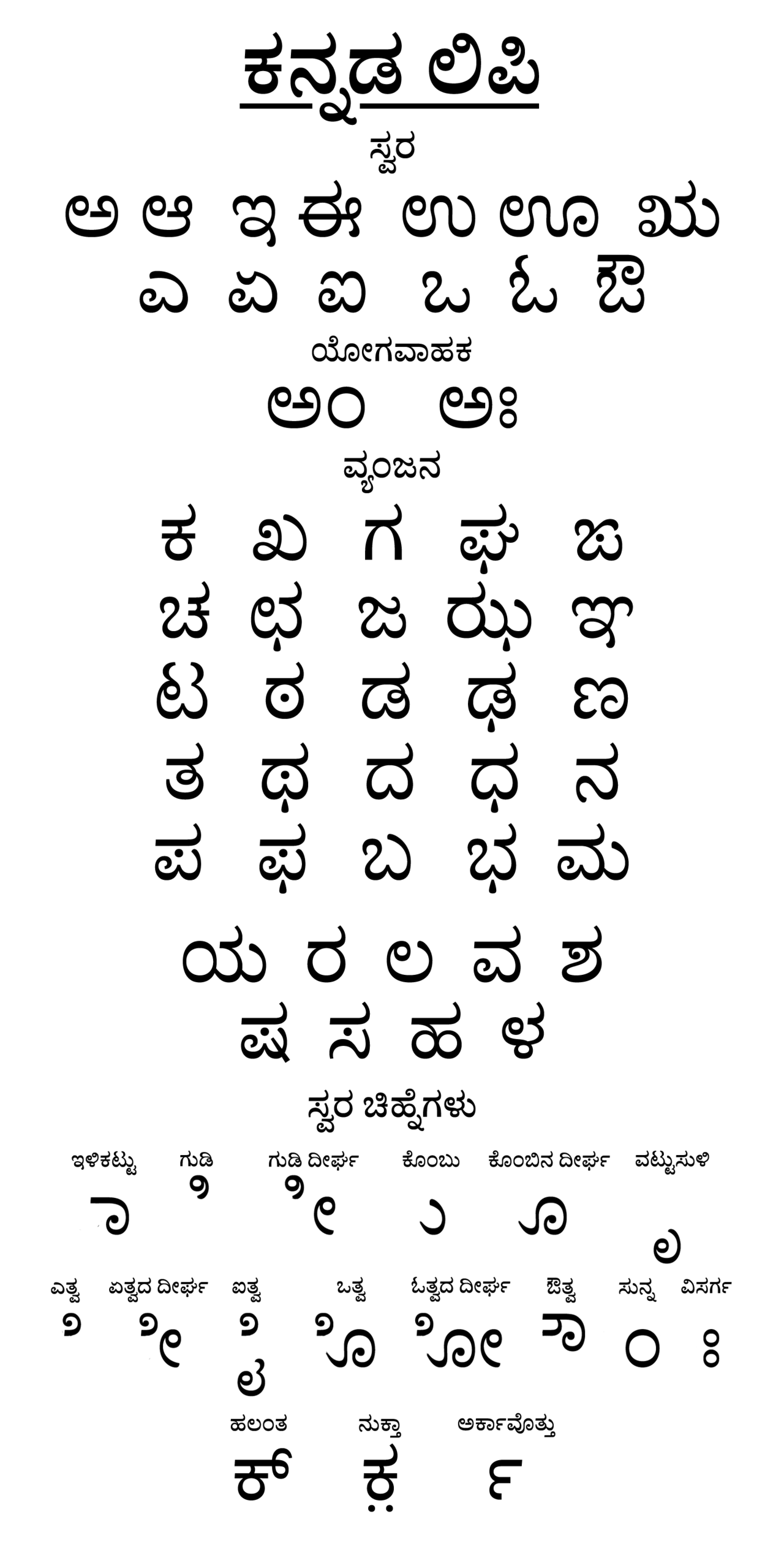
The Kannada aksharamala — where every young learner’s journey begins. (Wikimedia Commons, CC0)
What is a “Kannada Shaale”?
A Kannada Shaale is a community-run weekend school, usually organised by local Kannada associations and volunteer parents. There are no grand buildings or paid staff — just a borrowed community hall, a few whiteboards, and a group of dedicated families who believe their children deserve to read, write and speak the language of their roots. Classes typically run once a week or fortnightly, often alongside the cultural gatherings these communities already host in cities such as Munich, Frankfurt, Stuttgart, Berlin and Hamburg.
The goal is simple but powerful: to help children and teens who are growing up fully German feel equally, proudly Kannadiga. Many of these schools began with just a handful of families around a dining table and have since grown into structured programmes with dozens of students, graded levels and an annual calendar of events.
How they teach the language
The teaching begins, as it always has, with the aksharamala — the Kannada alphabet. But the method is refreshingly modern. Volunteer teachers break learning into graded levels, so a five-year-old tracing her first “ಅ” and a confident twelve-year-old reading short stories can both progress at their own pace.
Crucially, lessons are made fun. Teachers lean on songs, rhymes, picture cards, word games and simple conversation rather than rote memorisation. Popular graded readers such as Kannada Kali and locally prepared worksheets give structure, while apps, YouTube rhymes and video calls with grandparents in Karnataka turn screen time into practice time. Many schools pair spoken Kannada with reading and writing, so children do not just memorise letters — they actually chat, ask questions and tell stories in Kannada.
The best Kannada Shaale initiatives understand that a language cannot be separated from its culture. So, alongside the alphabet, children are introduced to the treasures of Kannada literature — the simple poems of Kuvempu and Da Ra Bendre, folk tales, proverbs (gaadegalu) and the moral stories of the Panchatantra. Older teens sometimes explore the pride of knowing that Kannada boasts eight Jnanpith awardees, the most of any Indian language.
Culture is taught through doing, not just reading. Students learn classical and folk songs, try their hand at Yakshagana dialogues, rangoli, and traditional dance, and take centre stage during community celebrations. These performances give shy children a real reason to practise — and a joyful memory attached to every Kannada word.
Festivals that become classrooms
Some of the most effective learning happens outside the classroom. Kannada Rajyotsava (1 November), Yugadi, Ganesha Chaturthi and Deepavali become vibrant, hands-on lessons. Children recite poems, perform skits, participate in quizzes and sing the naada geethe — absorbing vocabulary, history and belonging all at once. For teenagers, helping to organise these events builds leadership skills and a deeper personal connection to their identity.
Why it works — and why it matters
The success of these schools rests on three pillars: committed volunteers (often parents who teach for free), strong community (so children see dozens of peers who also speak Kannada), and consistency (regular classes that build real momentum). Challenges remain — busy weekends, mixed proficiency levels and keeping teens engaged — but creative teaching and peer bonding keep the classrooms full.
The payoff is priceless. Research consistently shows that bilingual children enjoy cognitive advantages, and nothing strengthens the bond with grandparents like a video call conducted entirely in Kannada. These initiatives give our next generation a confident dual identity: at home in Germany, yet never a stranger to Karnataka. A child who can read a letter from her ajji, sing a Kuvempu poem, or crack a joke in Kannada carries a gift that will last a lifetime.
Keeping Kannada alive in Germany is a shared responsibility. Every word learned, every story read and every conversation spoken in Kannada helps bridge generations and connect children growing up abroad with their heritage.
Because wherever Kannadigas live, the language can continue to flourish—as long as it is spoken, taught and cherished.
0 Comments